

Beaumont sits in the heart of Southeast Texas, a region that shares much of its climate and ecology with neighboring Southwest Louisiana. The Sabine River forms the border between the two states, but pests don’t observe geographic boundaries. The same warm temperatures, high humidity, and abundant rainfall that make East Texas’s forests and wetlands so productive also make Beaumont one of the most pest-active urban areas in the state.
For Beaumont homeowners and business owners, pest control Beaumont isn’t something to think about once a problem becomes obvious. By that point, the damage — whether structural, financial, or to your peace of mind — has already been done. Year-round professional pest management is the standard approach in this region for good reason.
Southeast Texas Climate and Its Effect on Pest Populations
Beaumont averages over 55 inches of rainfall per year, making it one of the wettest cities in Texas. Summers are hot and humid, with temperatures regularly exceeding 95 degrees Fahrenheit. Winters are mild, with only occasional freezing temperatures that are rarely sustained long enough to significantly impact pest populations.
This climate profile means that many pests active in spring and summer in other parts of the country remain active year-round in Southeast Texas. Termites forage continuously. Cockroaches don’t retreat with the cold. Mosquito season stretches from early spring through late fall. Homeowners who treat pest control as a warm-weather concern are leaving their property vulnerable for months of the year.
Why Beaumont’s Soil Conditions Favor Termites
Southeast Texas has some of the most termite-friendly soil conditions in the country. The region’s clay-heavy soils retain moisture exceptionally well, and the combination of that retained moisture and the area’s warm temperatures creates ideal conditions for subterranean termite colonies.
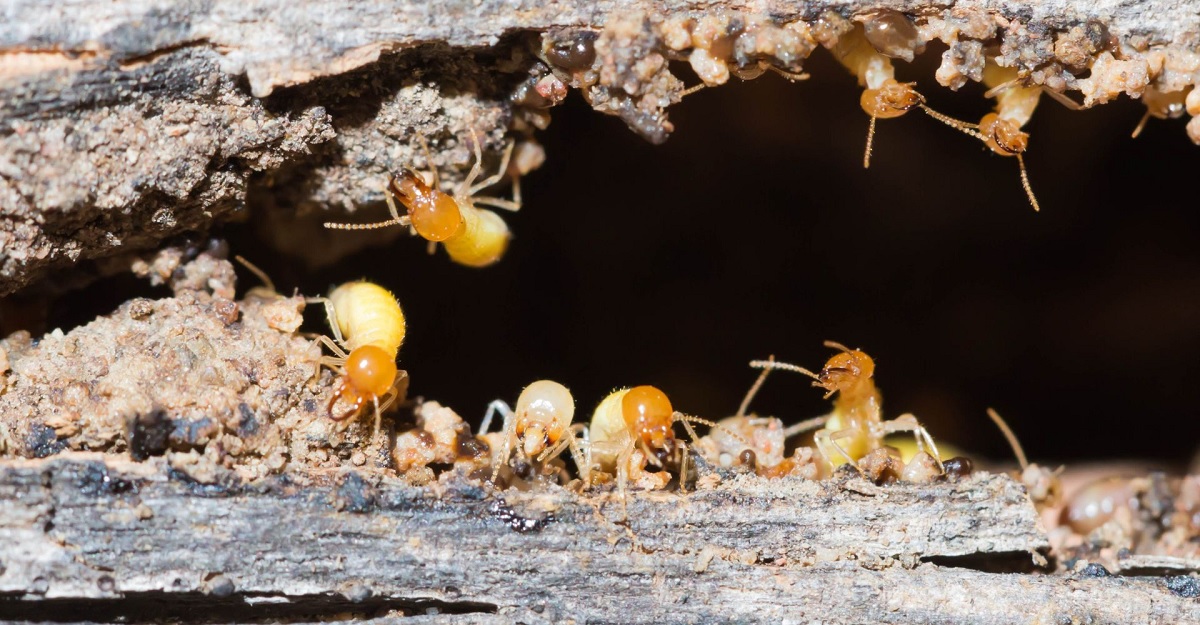
Subterranean termites live in the soil and build extensive underground networks that can cover thousands of square feet. A single mature colony can contain several million individuals. They forage continuously, following moisture gradients through the soil until they find wood — which, in a residential neighborhood, usually means the framing of a nearby home.
Recognizing Termite Activity in Beaumont Homes
Because termites operate inside wood and soil, most of their activity is invisible to homeowners. However, there are specific signs that indicate termite presence if you know what to look for.
Key Indicators of Subterranean Termite Activity
- Mud tubes on foundation walls: These are the most reliable indicator of subterranean termite activity. They are typically the width of a pencil and run vertically along foundation walls, piers, and exterior wood elements.
- Swarmers in spring: Beaumont’s termite swarm season runs from approximately February through May. Swarmers are winged reproductive termites that emerge in large numbers to start new colonies. Finding them inside your home means a colony is present nearby or already within your structure.
- Wood that sounds hollow: Termites consume wood along the grain, leaving a thin outer shell that sounds hollow when tapped. Check areas near the ground: baseboards, door frames, and support posts.
- Soft spots in flooring: Subfloor damage from termites can cause hardwood or laminate flooring to feel springy or soft in localized areas. This type of damage often goes unnoticed until it becomes severe.
The Risk to Beaumont’s Older Homes and New Construction
Both older and newer homes in Beaumont are at risk, though for somewhat different reasons. Older homes, particularly those built before the 1970s, often have untreated wood in their framing and may have foundation issues that make pest entry easier. Newer construction uses some treated materials, but treatments applied during construction do degrade over time, and homes without active monitoring systems eventually lose that protection.
Pre-treatment during construction is common in Southeast Texas, but it is not a permanent solution. The soil barrier created during construction can be disrupted by plumbing repairs, landscaping, and soil settling. Ongoing monitoring is essential regardless of when your home was built.
Other Major Pest Concerns in Beaumont
Fire Ants
Southeast Texas has one of the densest fire ant populations in the country. Beaumont’s warm climate and frequent rainfall create perfect conditions for fire ant colonies to thrive and spread rapidly. Fire ant mounds appear in lawns, garden beds, near electrical equipment, and along sidewalks and driveways. Their stings cause painful burning sensations and can trigger anaphylactic reactions in sensitive individuals.
For properties with children or pets, fire ant management is not optional — it’s a safety issue. Professional treatments using broadcast baits and targeted mound treatments provide longer-lasting control than over-the-counter products.
American and German Cockroaches
Both species are common in Beaumont, and each presents different challenges. American cockroaches enter from outside through gaps in foundations, around pipe penetrations, and through vents and drains. They prefer warm, moist environments and are commonly found in garages, crawl spaces, and utility rooms. German cockroaches establish indoors and are particularly associated with kitchens and bathrooms. Their rapid reproduction cycle makes them one of the most difficult pests to eliminate without professional intervention.
Mosquitoes
With Beaumont’s abundant rainfall and network of bayous and drainage canals, mosquito populations can be intense during warm months. The Gulf Coast region is historically associated with mosquito-borne illnesses, and professional mosquito control services that apply barrier treatments and address breeding sites can significantly reduce the risk to families spending time outdoors.
Rodents
Norway rats and roof rats are both present in Beaumont. Norway rats tend to burrow near foundations and are associated with areas near water, while roof rats prefer elevated areas like attics and tree canopies. Both species contaminate food and surfaces, damage wiring and insulation, and can introduce secondary pests like fleas and ticks into a home.
Termite control Beaumont: Understanding Your Treatment Options
When it comes to protecting your Beaumont home from termites specifically, there are several professional treatment approaches available.
Liquid Soil Treatment
A liquid termiticide is applied to the soil around and beneath the structure, creating a continuous barrier. Termites moving through the treated zone are either killed or repelled. Non-repellent formulations are generally preferred because termites cannot detect them and unknowingly pass through the treated zone, bringing the product back to the colony.
Termite Baiting Systems
Bait stations are installed around the perimeter of the structure and contain cellulose material laced with a slow-acting growth inhibitor. Foraging termites feed on the bait and share it with the colony, eventually disrupting reproduction and eliminating the population. Bait systems require ongoing monitoring and maintenance to remain effective.
Wood Treatment
In some situations, particularly for localized infestations or spot treatments, wood can be directly treated with termiticides injected into galleries or applied to exposed surfaces. This approach is typically used in conjunction with soil treatment rather than as a standalone solution.
A licensed pest control professional will assess your specific property and recommend the most appropriate combination of treatments based on the construction type, soil conditions, and level of termite pressure.
FAQ
Q: Does Beaumont’s oil and petrochemical industry affect pest populations? A: Industrial activity itself doesn’t directly increase pest populations, but large industrial facilities with abundant lighting, heat sources, and complex infrastructure can attract and harbor pests. For residential homeowners, the more relevant factor is Beaumont’s climate and geography, which independently create significant pest pressure.
Q: How soon after a termite treatment can I use my home normally? A: Most liquid termite treatments applied to the soil exterior require little to no disruption to the home’s interior. Residents are typically able to remain in the home during exterior treatment. For any interior treatments or fumigation, specific re-entry timelines will be provided by your technician. Most standard termite treatments have a very short re-entry period for exterior applications.
Q: Are fire ants dangerous to pets? A: Yes, particularly to smaller dogs, cats, and animals that cannot easily escape a mound. Fire ants can swarm quickly when disturbed and sting repeatedly. Pets that are staked outdoors or that explore garden areas are at particular risk. Multiple stings can cause reactions ranging from localized pain to more serious systemic responses in sensitive animals.
Q: How do I find out if my neighborhood has a high termite risk? A: Your local pest control professional can provide information on termite pressure in your specific area. Beaumont and surrounding Southeast Texas communities are generally considered high-risk for subterranean termites. Factors that increase risk on a specific property include proximity to wooded areas, soil moisture levels, presence of wood debris near the foundation, and construction type.
Q: Is it possible to have termites and not see any obvious damage for years? A: Absolutely. Termites are extremely efficient at concealing their activity. They hollow out wood from the inside while leaving the exterior surface intact. A home can sustain years of significant internal damage before any outward sign becomes visible. This is exactly why professional annual inspections are so important — technicians know exactly where to look and have tools to detect activity that a visual inspection by a homeowner would miss.